Ionizing radiation underpins a number of technologies, and all indications are that it will become increasingly so in the coming years: understanding how it works, its potential, and how to use it safely will be one of the most essential skills in all sectors affected by this change.
In this article we offer an overview.
Contexts of use for ionizing radiation technologies.
In industry and medicine, the use of machinery and devices that emit ionizing radiation is now widespread and crucial for a variety of applications.
In construction and manufacturing, industrial radiography is a common application, used to inspect the internal structure of materials, such as welds and metal components, ensuring the quality and integrity of artifacts and, consequently, structural safety and compliance with manufacturing standards.
The main sources of artificial ionizing radiation, however, are found in the medical field.
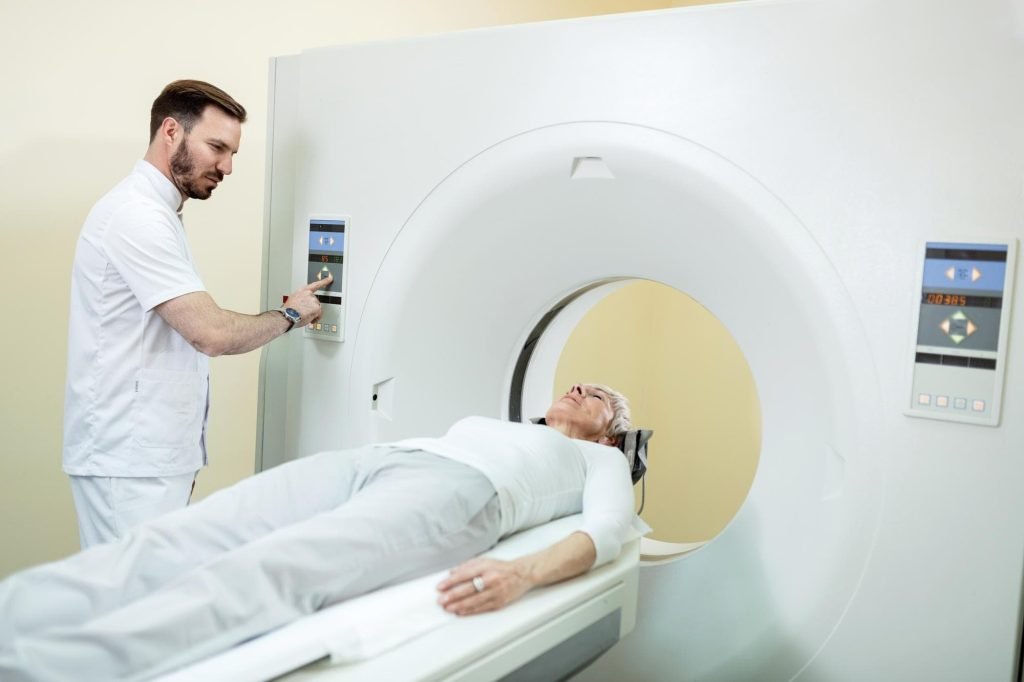
X-rays are a key element in diagnosing and monitoring health conditions. Diagnostic devices, such as computed tomography (CT) and magnetic resonance imaging (MRI) equipment, exploit ionizing radiation to obtain detailed images of the human body, facilitating diagnosis and treatment planning.
Other medical devices, such as linear accelerators used in radiation therapy, emit ionizing radiation to treat cancerous tumors. These machines allow precise targeting of radiation to destroy cancer cells while minimizing the impact on surrounding healthy tissues. The responsible and safe use of such machines is critical to ensuring the quality of diagnosis and treatment, as well as the protection of operators and patients.
Training of assigned workers
Any technology that makes use of ionizing radiation requires specific training.
In health care settings, coursework related to radiation protection is required by law for all workers with duties involving direct medical exposure. In certain cases, pediatricians and general practitioners are also included.
The training course for health care workers is designed to provide specific skills and knowledge needed to manage exposure to ionizing radiation in medical settings. Course content may include practical and theoretical guidance to safe use – of the worker himself and of patients – as well as an overview of the salient features of current legislation. Emphasis is also placed on developing communication skills to inform and educate patients and colleagues about the risks associated with radiation exposure.
Similarly, in industrial settings, training aims to prepare for the use of the nonradiographic method of nondestructive testing (NDT), which can use radiation to verify the integrity of components of various sizes, always under safe conditions.
What to expect from the future
In all likelihood, the use of machinery based on ionizing radiation is likely to find applications in increasing numbers-one of which is food preservation.
Irradiation of food by radiation allows food quality to be preserved by a process that inhibits the microbial cell division mechanism: degradative enzymes are weakened, slowing food spoilage without altering the product.
Importantly, despite some widespread distrust in the use of ionizing radiation in food, the World Health Organization has confirmed the effectiveness and safety of this process.
Want more information on this topic?
Contact us at [email protected]
Call us at +39 0221103454