Radiometry and environmental remediation is a branch of science that deals with the measurement and analysis of radiation present in the environment.
In cleanup procedures, radiometry is essential to evaluate the level of radiation exposure of the population and the environment, as well as to monitor and manage situations of potential radioactive contamination. As a result, it can be requested in a variety of contexts.
This article offers an overview of the topic, with useful information for companies and entrepreneurs.
Importance of radiography in reclamation
The implementation of radiometric techniques in environmental remediation has the objective of evaluating, monitoring and effectively managing possible situations of radioactive contamination, with detailed information on the presence and distribution of radiation.
Using tools such as radiation detectors and gamma spectrometers, specialists can map contaminating areas, measure the amount and type of radiation present, and locate hotspots. This information is essential for planning and carrying out targeted and effective remediation actions.
Even more, radiometry allows the effectiveness of remediation operations to be monitored over time, verifying the reduction in radiation levels and guaranteeing the restoration of radiological safety of the areas affected.
For all risk areas, environmental analysis via radiometry is the main requirement for an accurate radiometric assessment and, consequently, for the adoption of measures to ensure the long-term protection of people and the ecosystem.
Radiometry and environmental remediation: Equipment and procedures
Environmental remediation begins with a detailed characterization of the area to identify sources of contamination and evaluate its extent. Subsequently, we proceed with containment, isolation and removal of radioactive sources, adopting suitable techniques and materials.
This is followed by the treatment phase, during which methods such as stabilization, immobilization or chemical transformation of radioactive substances are applied to make them less dangerous and easier to manage.
Among the main radiometric instruments used we find radiation detectors, such as dosimeters and Geiger-Muller counters, which allow the presence and measurement of the intensity of gamma, beta and alpha radiation to be detected: it thus becomes possible to identify any sources of radioactive contamination and to analyze environmental samples or materials.
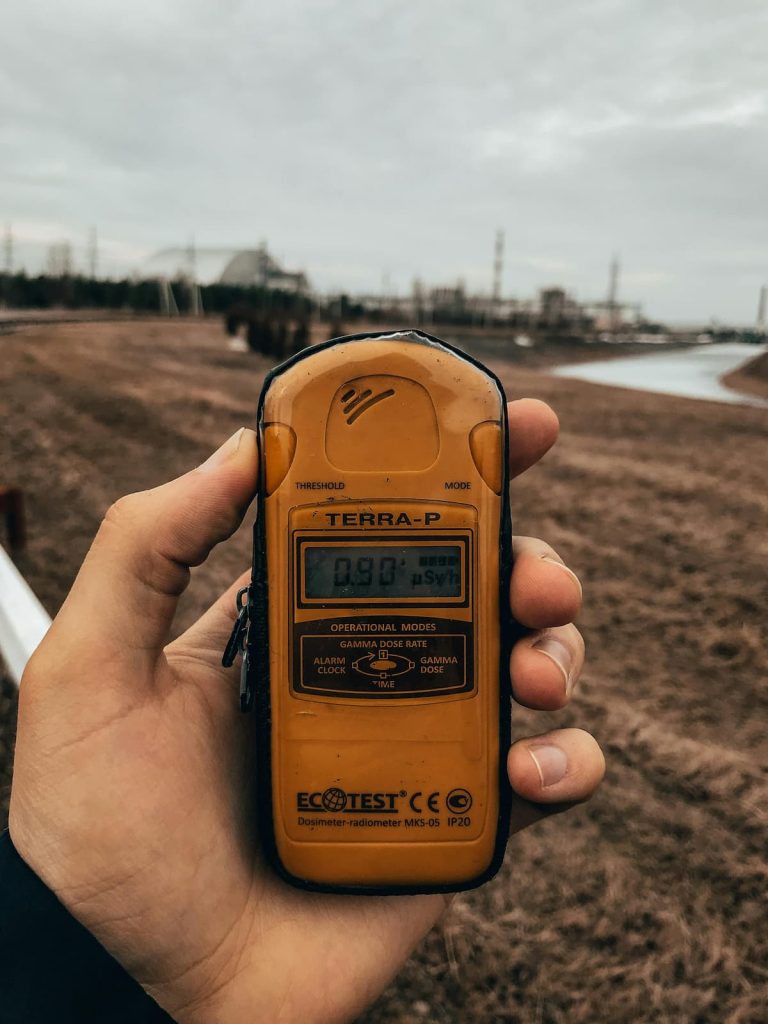
In addition to portable detectors, there are also fixed radiometric systems used for continuous monitoring of critical environments such as nuclear plants, hospitals, laboratories and sensitive industrial sites. These systems are able to constantly record radiation levels and trigger alarms if safety limits are exceeded.
Read also “Le tipologie di esposizione alle radiazioni ionizzanti”
Post-remediation monitoring and quality control
After completing cleanup operations, it is essential to perform post-cleanup monitoring to ensure the continued safety of the area. This phase involves a series of control activities aimed at verifying the effectiveness of the interventions and maintaining radiation levels within acceptable limits.
Post-remediation monitoring includes the installation of continuous environmental monitoring systems to detect any changes in radiation levels over time. These systems can be composed of passive or active dosimeters, fixed or mobile detectors, and radiation analysis instruments.
In addition to environmental monitoring, it is essential to carry out periodic quality checks to ensure that safety standards are met. These checks involve visual inspections, direct radiation measurements, soil and water analyses, as well as health assessments of the operators and personnel involved.
EDR in environmental remediation procedures
In this scenario, Radiation Protection Experts plan and supervise remediation activities, identify sources of contamination, monitor radiation levels and evaluate the effectiveness of interventions. All this, in collaboration with engineers, technicians and operational staff.
EDRs are also responsible for ensuring compliance with regulations and guidelines, minimizing risk to the environment and public health. Their expertise guarantees a complete remediation process in line with the highest safety standards.
Are you looking for experts in gamma ray sterilization?
Contact us at [email protected]
Call us on the number +39 0221103454