The concept of occupational dosimetry includes all procedures and technologies aimed at measuring exposure to ionizing radiation in the workplace. Thus, we are talking about medical personnel, nuclear technicians, and industrial X-ray specialists.
The reason is easily understood: ionizing radiation, while useful in various industrial and medical fields, can be harmful to health. Prolonged or high-dose exposure can cause serious effects such as cancer, damage to the nervous system, or fertility problems: consequently, dosimetry allows the risks to be assessed and possible protective measures to be activated.
Specifically, dosimetry allows detection of radiation type and dose, as well as exposure time.
Dosimetry in the workplace: technological supports and surveillance
Occupational dosimetry is a monitoring system that relies on the use of dosimeters, instruments that can measure the radiation dose absorbed by an individual.
There are different types of dosimeters, each with specific characteristics:
- Passive dosimeters: these are the most common and measure accumulated radiation dose over a period of time (e.g., monthly, quarterly).
- Active dosimeters: provide a real-time measurement of radiation dose and are used in high-risk situations.
- Electronic dosimeters: offer the ability to store and transmit dosimetry data for later analysis.
To ensure the safety of those involved, however, technological supports must be accompanied by a program of physical and medical surveillance, including periodic checks and examinations to verify the worker’s fitness.

Dosimetry and technical measures to protect personnel
Dosimetry is therefore an enabling technology for the implementation of technical and organizational measures to reduce personnel exposure, including the following:
- shielding: protect radiation sources with appropriate barriers;
- distance: increase the distance between the radiation source and the worker;
- time: reduce the time of radiation exposure.
Even more than technical measures, it is the establishment of safe procedures and staff training that makes the difference.
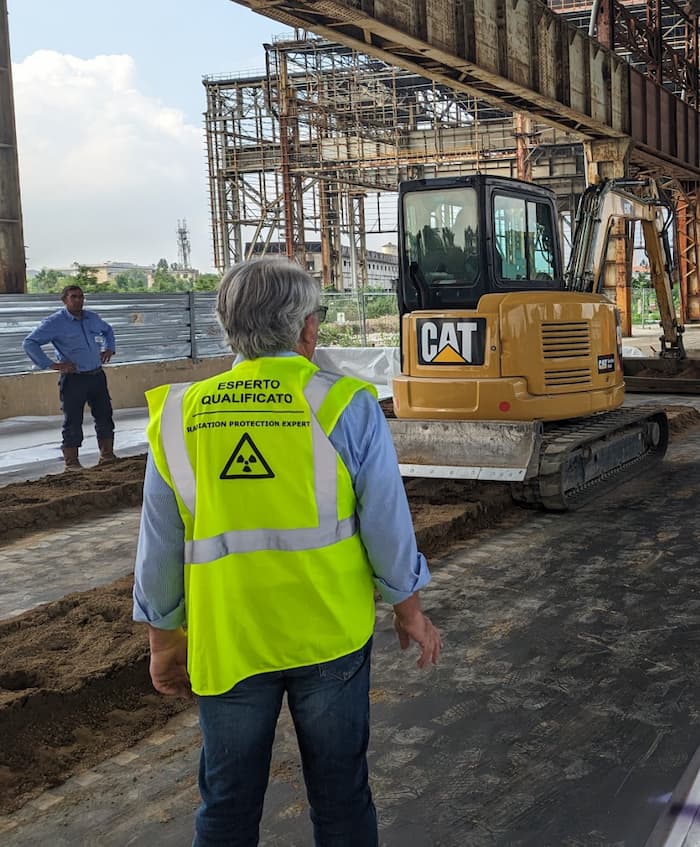
In this scenario, it is easy to see how it is essential for companies to involve an external professional with vertical expertise, the Radiation Protection Expert, who can provide comprehensive advice about the implementation of dosimetry systems.
Indeed, the EDR possesses a thorough knowledge of the principles of radiation protection, radiation physics, and dosimetry. His or her skills enable him or her to assess risks and develop a comprehensive and organic corporate radiation protection plan, including physical and dosimetric surveillance of exposed workers.
Want more information about dosimetry in the enterprise?
Contact us at [email protected]
Call us at +39 0221103454