The concept of Maximum Credible Incident closely affects all companies and public agencies that make use of ionizing radiation-based technologies, as it allows for the implementation of prevention measures consistent with actual risk levels.
In this article we offer an overview of the topic.
What is the Maximum Credible Incident
The term “Maximum Credible Incident” (MIC) refers to a key notion in safety management in high-risk sectors such as the chemical or nuclear industries. Simply put, MIC represents a concept that focuses on the worst possible scenario or the most serious event that could occur in a given situation.
The definition of MIC is thus linked to risk assessment and safety planning: the reference figures try to identify what could be the most serious accident in terms of consequences, both in terms of human, environmental and economic impact.
In environments exposed to radioactive hazards, the Maximum Credible Incident could include events such as accidents during the transportation of radioactive material, with the loss or damage of the container housing the radioactive material.

If, on the other hand, we think of medical facilities, MIC could include human errors or malfunctions in radiation therapy equipment that lead to excessive radiation doses to patients.
MIC assessment is an important requirement for developing emergency plans and preventive measures to minimize damage in case of accidents. In addition, such assessments are strictly regulated and monitored to ensure that facilities working with radioactive materials meet the highest standards of radiological safety and protection.

Methods of evaluation
The Maximum Credible Incident assessment relies on several analysis methodologies to identify and quantify the most severe scenarios possible in a given context.
- Historical data analysis. This approach is based on analysis of previous incidents or historical data from incidents under similar conditions to identify possible causes and consequences.
- System analysis. The entire system is analyzed, identifying possible sequences of events that could lead to an MIC. This approach is widely used in the nuclear industry.
- Model-based approach. The use of mathematical and computer models allows possible scenarios to be simulated, taking into consideration variables such as the probability of failures, the behavior of the material involved, and the safety measures implemented.
- Vulnerability analysis. This methodology assesses the ability of a system to withstand catastrophic events. For example, in a chemical plant, vulnerability analysis might consider the robustness of structures against explosions.
In general, MIC assessment requires a thorough understanding of the system, the technologies involved, and current regulations. The methodologies used may vary by industry and specific needs, but all aim to identify the most severe potential accident scenarios and develop appropriate safety plans and preventive measures.
Prevention and evaluation: the figure of the EDR
Approaches to addressing the Maximum Credible Incident focus on reducing the likelihood of catastrophic events and mitigating negative impacts.
To manage risk effectively, companies must identify potential MIC scenarios and assess their probability and consequences. In this scenario, the figure of the EDR (Radiation Protection Expert) turns out to be crucial: a professional-or a team of professionals-with a range of skills that allows him or her to:
- perform vulnerability analysis of facilities;
- define security measures:
- implement emergency plans;
- organize staff training;
- evaluate the adoption of specific technologies for constant monitoring and early detection of anomalies.
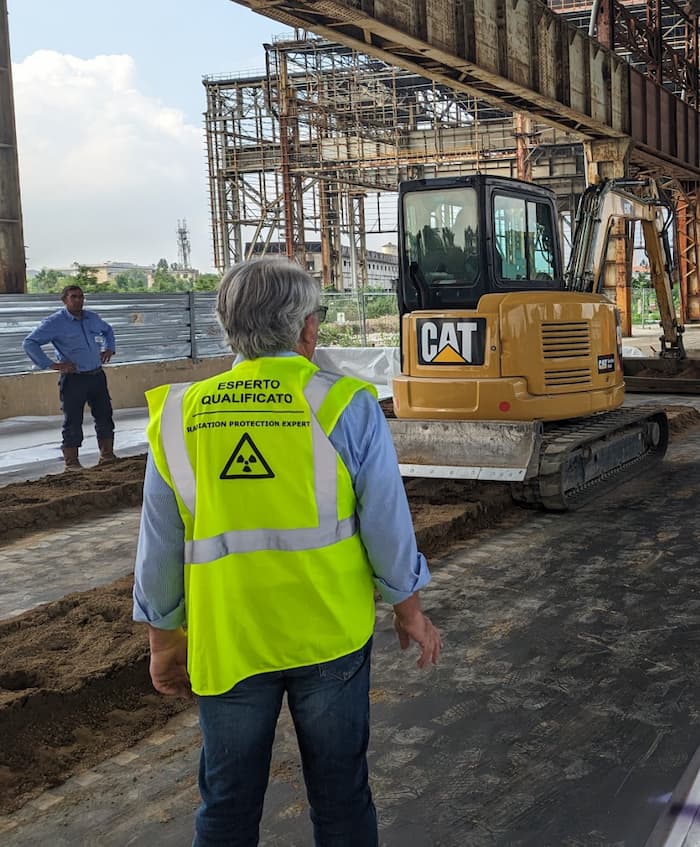
EDR’s contribution comes in the form of a holistic approach that integrates detailed analysis, advanced technologies, contingency planning and a safety-driven corporate culture, helping companies implement rigorous maintenance, inspection and verification policies to avoid failures and accidents.
Want more information on this topic?
Contact us at [email protected]
Call us at +39 0221103454